


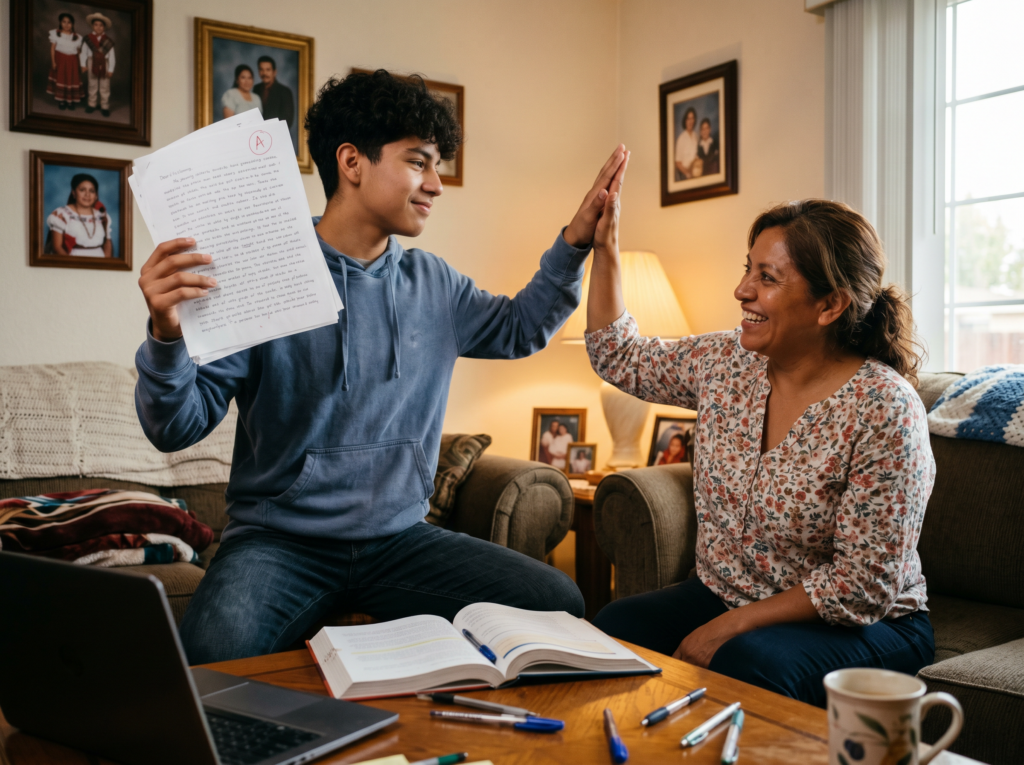
Why Self-Esteem Is Not Enough
For many years, parents were told that children needed strong self-esteem to thrive. The message was simple: help children feel good about themselves, praise them often, protect them from discouragement, and confidence will follow.
There is truth in this. Children with ADHD often hear far more criticism than encouragement. They may be corrected for interrupting, reminded about forgotten assignments, scolded for messy rooms, or compared unfavorably with siblings and classmates. Over time, these experiences can take a toll.
But self-esteem alone is not enough. A child can feel good when things are going well and still fall apart when they face frustration, failure, rejection, or disappointment. Resilience is different. Resilience is the ability to recover, adapt, learn, and keep going when life becomes difficult. For children and teens with ADHD, resilience may be even more important than self-esteem because they often encounter more bumps in the road.
ADHD Children Experience More Setbacks
Children with ADHD frequently struggle in areas that matter deeply to daily life. They may forget assignments, lose materials, miss instructions, interrupt friends, react strongly to criticism, or have trouble finishing tasks they fully intended to complete. Even when they are bright, creative, caring, and capable, their performance may be inconsistent.
This inconsistency is confusing for everyone. Parents may wonder, “Why can they do it one day and not the next?” Teachers may assume the child is not trying. The child may begin to believe, “Something is wrong with me.”
Repeated setbacks can become part of a child’s identity. They stop seeing themselves as someone learning skills and begin seeing themselves as someone who fails. That is why resilience matters so much.
Resilience Begins with a Different Message
Resilience does not mean pretending that ADHD challenges are not real. It does not mean telling children to “try harder” or “toughen up.” Instead, resilience begins with a different message: “You are not broken. Your brain works differently. Some things will be harder for you, but you can learn strategies, build skills, ask for help, and recover from mistakes.”
That message is powerful because it separates the child’s worth from the child’s performance. A missed assignment becomes a problem to solve, not proof of failure. An emotional outburst becomes a signal that regulation skills need support, not evidence that the child is bad. A messy backpack becomes an executive function challenge, not a character flaw.
When children learn to interpret struggles this way, they become less ashamed and more willing to try again.
Praise Is Helpful, But It Has Limits
Praise can be encouraging, especially when children are used to hearing criticism. But praise works best when it is specific and connected to effort, strategy, or growth.
General praise sounds like:
- “You are so smart.”
- “You are amazing.”
- “You are the best.”
These comments may feel good in the moment, but they do not always help children understand what they did well or how to repeat it.
Resilience-building praise sounds different:
- “I noticed you came back to the assignment after taking a break.”
- “You asked for help before things got too overwhelming.”
- “You were frustrated, but you kept working on the problem.”
- “That strategy helped you remember your materials today.”
This kind of feedback teaches children that success is not magic. It comes from skills, choices, support, and persistence.
The Role of Manageable Struggle
One of the hardest parts of parenting a child with ADHD is knowing when to help and when to step back. If parents rescue too quickly, children may not develop confidence in their ability to handle discomfort. If parents demand too much independence too soon, children may feel overwhelmed and defeated. The key is manageable struggle.
Children build resilience when they face challenges that are difficult but not impossible. They need enough support to keep going, but enough responsibility to experience themselves as capable. For a younger child, that might mean packing a backpack using a visual checklist while a parent stays nearby. For a teen, it might mean emailing a teacher about a missing assignment with help drafting the message. For a college student, it might mean using campus support services before a crisis develops.
The goal is not to remove every obstacle. The goal is to help the child learn how to meet obstacles with tools.
Emotional Regulation Comes First
Many ADHD children and teens do not struggle only with attention. They struggle with emotional intensity. A small correction may feel like rejection. A difficult assignment may trigger panic or anger. A disappointing grade may become evidence that they will never succeed.
When emotions flood the nervous system, reasoning becomes harder. A child who is overwhelmed cannot easily problem-solve, listen, plan, or reflect. This is why resilience must include emotional regulation. Children need help learning how to pause, calm their bodies, name what they are feeling, and return to a problem after emotions settle.
Parents can model this by saying:
- “Let’s take a break and come back to this.”
- “This feels big right now. We do not have to solve it while everyone is upset.”
- “You are not in trouble for having feelings. Let’s figure out what to do next.”
These responses teach children that emotions are manageable. They do not have to run the show.
Reframing Failure as Information
Children with ADHD often experience failure as personal. They may say things like:
- “I am stupid.”
- “I always mess up.”
- “I cannot do anything right.”
Resilience grows when families reframe failure as information. Instead of asking, “Why did you fail?” ask:
- “What got in the way?”
- “What part worked?”
- “What part broke down?”
- “What could we change next time?”
This approach turns failure into feedback. It helps children become investigators rather than defendants. A failed morning routine may reveal that the child needs clothes laid out the night before. A late project may reveal that the student needs interim deadlines. A friendship conflict may reveal that the teen needs help noticing conversational cues. The point is not to excuse the behavior. The point is to learn from it.
Building Problem-Solving Muscles
Resilience is closely connected to problem-solving. Children become more resilient when they learn that problems can be broken down, examined, and addressed. Parents can help by involving children in the solution process.
Instead of saying: “Here is what you are going to do.” Try:
- “What do you think would make this easier?”
- “What has helped before?”
- “What is one small step we could try?”
- “What support would help without taking over?”
This builds ownership. Children are more likely to use strategies they helped create. Over time, they begin to internalize the process: pause, notice, break it down, try a strategy, adjust if needed – that is resilience in action.
Teens Need Resilience, Not Just Supervision
As children become teenagers, the stakes often feel higher. School demands increase. Social relationships become more complex. Technology becomes more distracting. College, work, and independence appear on the horizon.
Parents may respond by increasing control.
- More reminders.
- More monitoring.
- More consequences.
Sometimes structure is necessary. But teens also need opportunities to practice self-management while still having a safety net. A resilient teen needs to learn:
- How to ask for help.
- How to recover from a bad grade.
- How to manage disappointment.
- How to advocate with teachers.
- How to notice when a system is not working.
- How to restart after avoidance.
These skills matter as much as any single report card.
The College Transition Test
For many students with ADHD, college becomes the ultimate resilience test. The external structure of home and high school often disappears. No one wakes them up, checks their planner, monitors sleep, or reminds them to turn in assignments. Even very capable students can struggle when executive function demands suddenly increase.
Students who have only been managed may flounder. Students who have built resilience are better prepared. They may still struggle, but they know how to seek support, adjust routines, communicate with professors, use accommodations, and recover from setbacks. That is why resilience-building should begin long before college. The goal is not to create a perfect student. The goal is to help a young person become someone who knows what to do when things are not perfect.
What Parents Can Do
Parents build resilience through everyday interactions. They build it when they:
- Stay calm during setbacks.
- Focus on solutions instead of shame.
- Let children struggle a little while offering support nearby.
- Tell the truth about ADHD without making it a life sentence.
- Celebrate effort, courage, flexibility, and recovery.
Most of all, they build it when they communicate: “You can handle hard things, and you do not have to handle them alone.”
The Strongest Kind of Confidence
Self-esteem says, “I feel good about myself.” Resilience says, “I can get through this.” Children and teens with ADHD need both. But when life becomes difficult, resilience carries them further. A resilient child does not believe they will never fail. They believe failure is not the end of the story. A resilient teen does not avoid every challenge. They learns how to recover, adapt, and begin again.
That may be the greatest gift parents, teachers, coaches, and caregivers can offer children with ADHD: not protection from every struggle, but the steady experience of discovering that struggle can be survived, understood, and transformed into growth.
References
- https://www.additudemag.com/building-resilience-in-children-with-adhd
- https://chadd.org/adhd-weekly/helping-teens-become-resilient-adults
- https://www.adhdcentre.co.uk/adhd-and-resilience-how-to-bounce-back-from-setbacks-and-thrive/
- https://www.childrensresourcegroup.com/fostering-resilience-and-grit-in-those-with-adhd/
- https://www.adhddude.com/blog/how-to-help-kids-with-low-frustration-tolerance