


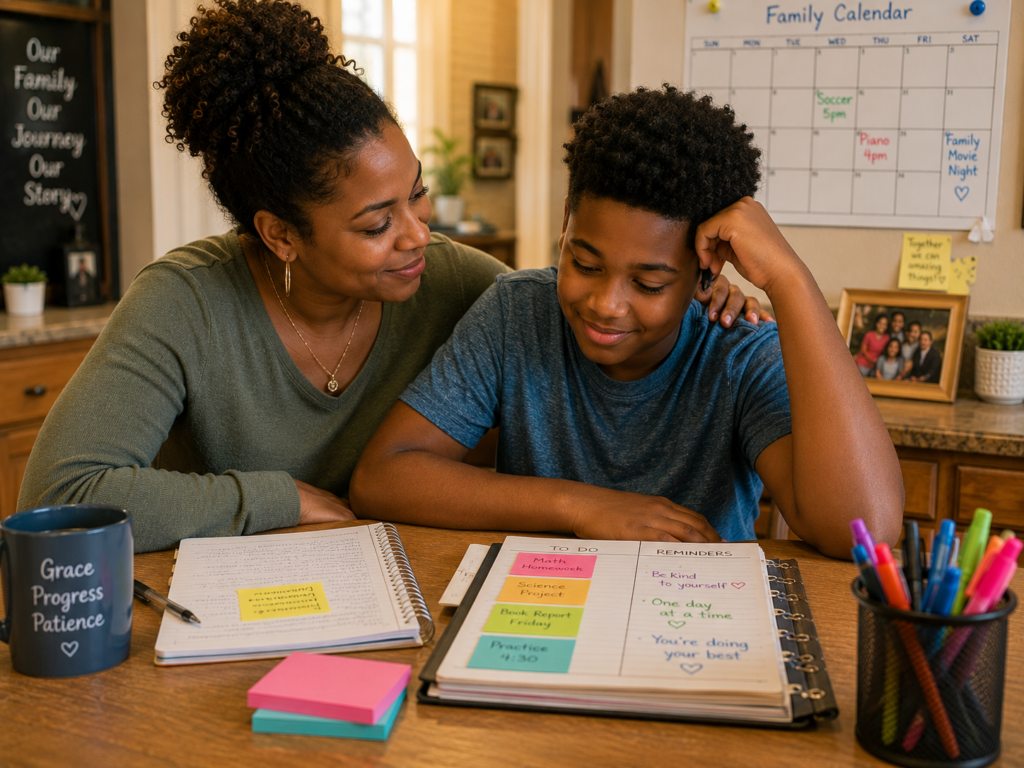
When the Diagnosis Feels Surprisingly Familiar
When a child is diagnosed with ADHD, most parents expect to spend the next few weeks learning about their son or daughter. Instead, many find themselves learning about themselves. The psychologist begins describing executive function challenges, distractibility, impulsivity, emotional regulation, time blindness, and difficulty staying organized. As the conversation continues, one parent quietly thinks, “That sounds a lot like me.”
It is a moment that has become increasingly common.
As awareness of ADHD has grown, so has the recognition that ADHD often runs in families. Researchers estimate that ADHD is one of the most heritable neurodevelopmental conditions. In many households, a child’s diagnosis becomes the first clue that a parent has spent years navigating similar challenges without realizing there was an explanation. For some parents, this discovery brings relief. For others, it raises difficult questions about the past. For nearly everyone, it changes the way they think about parenting.
Parenting Is an Executive Function Marathon
Parenting requires a remarkable number of executive function skills. Keeping track of appointments, school calendars, permission slips, medications, extracurricular activities, meals, laundry, finances, and household routines is demanding for any parent. Add emotional coaching, homework help, bedtime routines, and sibling relationships, and the list grows even longer.
For parents with ADHD, these responsibilities can feel like trying to juggle while standing on a moving sidewalk.That does not mean they are less loving or less committed. It simply means they are managing many of the same executive function demands that challenge their children.
Ironically, this can also create tremendous empathy. Parents who understand what it feels like to lose track of time, become overwhelmed by clutter, or struggle to get started on difficult tasks often recognize those same experiences in their children.
The Good News About Shared Experience
Sharing ADHD is not only a challenge.It can also become a strength. Parents who understand ADHD from the inside often recognize subtle signs that others miss. They know that forgetting homework is not always a sign of laziness. They understand how overwhelming a noisy classroom can feel. They appreciate the emotional sting of repeated criticism. This shared experience can create a powerful bond.
Children often feel deeply understood when a parent says, “I know what that feels like because I’ve experienced something similar.” That sense of connection can reduce shame and increase trust.
When Similar Challenges Collide
Of course, shared experiences do not always make life easier. Sometimes they create the perfect storm. A parent who struggles with organization may find it difficult to establish consistent household routines. A child who resists transitions may trigger frustration in a parent who is already running late.
Strong emotions from one family member can quickly activate strong emotions in another. These situations are not signs of failure. They are reminders that ADHD affects the entire family system.
The goal is not perfection. It is learning how to recognize these patterns before they become power struggles.
Moving From Judgment to Curiosity
One of the most important shifts families can make is replacing judgment with curiosity. Instead of asking, “Why can’t we ever get out the door on time?” Try asking, “What part of our morning routine keeps breaking down?”.
Instead of blaming individuals, families begin examining systems.
- Would a visual checklist help?
- Would preparing backpacks the night before reduce stress?
- Would setting timers create smoother transitions?
When everyone participates in solving problems, ADHD becomes a shared challenge rather than one person’s burden.
Modeling Matters More Than Perfection
Children learn as much from watching their parents recover from mistakes as they do from watching them succeed. A parent who says, “I forgot something important today. Let’s figure out a better system for next time,” is teaching resilience, problem-solving, and self-compassion all at once.
Parents do not need to pretend they have everything under control. In fact, children often benefit from seeing healthy coping strategies in action. When adults acknowledge their own challenges without shame, they give children permission to do the same.
Building Systems That Support Everyone
Families affected by ADHD often do better when they rely less on memory and more on systems.
- Shared digital calendars.
- Color-coded schedules.
- Family planning meetings.
- Visual reminders.
- Consistent routines.
These tools are not signs of weakness. They are examples of designing the environment to support success. One of the greatest gifts parents can give their children is demonstrating that asking for help, using tools, and creating systems are signs of wisdom—not inadequacy.
The Opportunity Hidden Inside the Challenge
Many parents initially worry that sharing ADHD with their child means the road ahead will be harder. In some ways, it will. There will be forgotten appointments, emotional days, unfinished projects, and moments of frustration. But there will also be opportunities.
Parents who understand ADHD firsthand are uniquely positioned to teach skills they had to learn through experience. They can normalize setbacks, celebrate progress, and help children develop confidence rooted in self-understanding rather than perfection.
In many families, the child’s diagnosis becomes the beginning of healing for more than one generation.
Growing Together
Perhaps that is the most hopeful message of all. Parent and child do not have to travel separate paths. They can learn together, discover strategies together, and celebrate successes together.
They can remind one another that ADHD is not a measure of intelligence, character, or potential. It is simply one way the brain develops. When families approach ADHD with curiosity, compassion, and a willingness to grow, what once felt like a double challenge can become a shared journey of resilience, understanding, and connection.
That may be one of the greatest strengths an ADHD family can possess.
Learn More
- https://childmind.org/article/help-for-parents-with-adhd/
- https://www.additudemag.com/parenting-with-adhd-strategies/
- https://adhdspecialist.com/post/breaking-generational-adhd-parents-guide
- https://www.verywellmind.com/help-for-parents-who-have-adhd-20875
- https://www.youtube.com/watch?v=r9KFe7ShO6c&t=595s